


Agents draft. People decide.
The single rule behind every system we have put into production this year, and why it makes automation safer to adopt, not slower.
Every operating system we shipped in 2026 runs on one rule: software prepares, a person approves. Agents draft the proposal, the follow-up email, the article, the lead dispute. Nothing prices, sends, or publishes until someone with authority says yes.
This sounds like a brake. In practice it is the accelerator. An owner who knows nothing leaves the building without a signature will let software do far more of the preparation, because the downside of a bad draft is a rejected draft, not a lost client.
Where the boundary sits
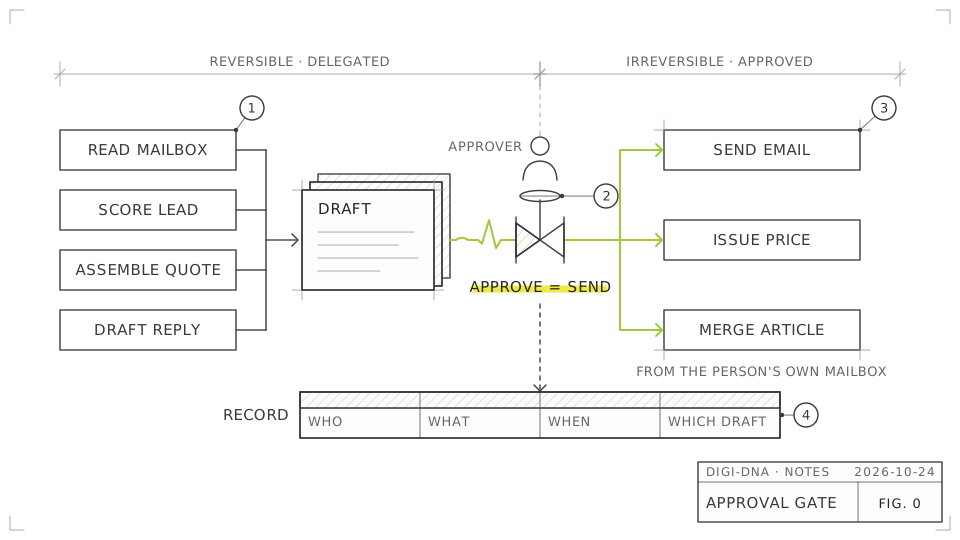
The approval point belongs at the irreversible step. Reading a mailbox, scoring a lead, assembling a quote, drafting a reply: all reversible, all delegated. Sending the email, issuing the price, merging the article: irreversible, all approved. In the contractor's operating system we built, that rule is written down as a standing constraint: agents never send mail and never write to the codebase.
Make approval cheap
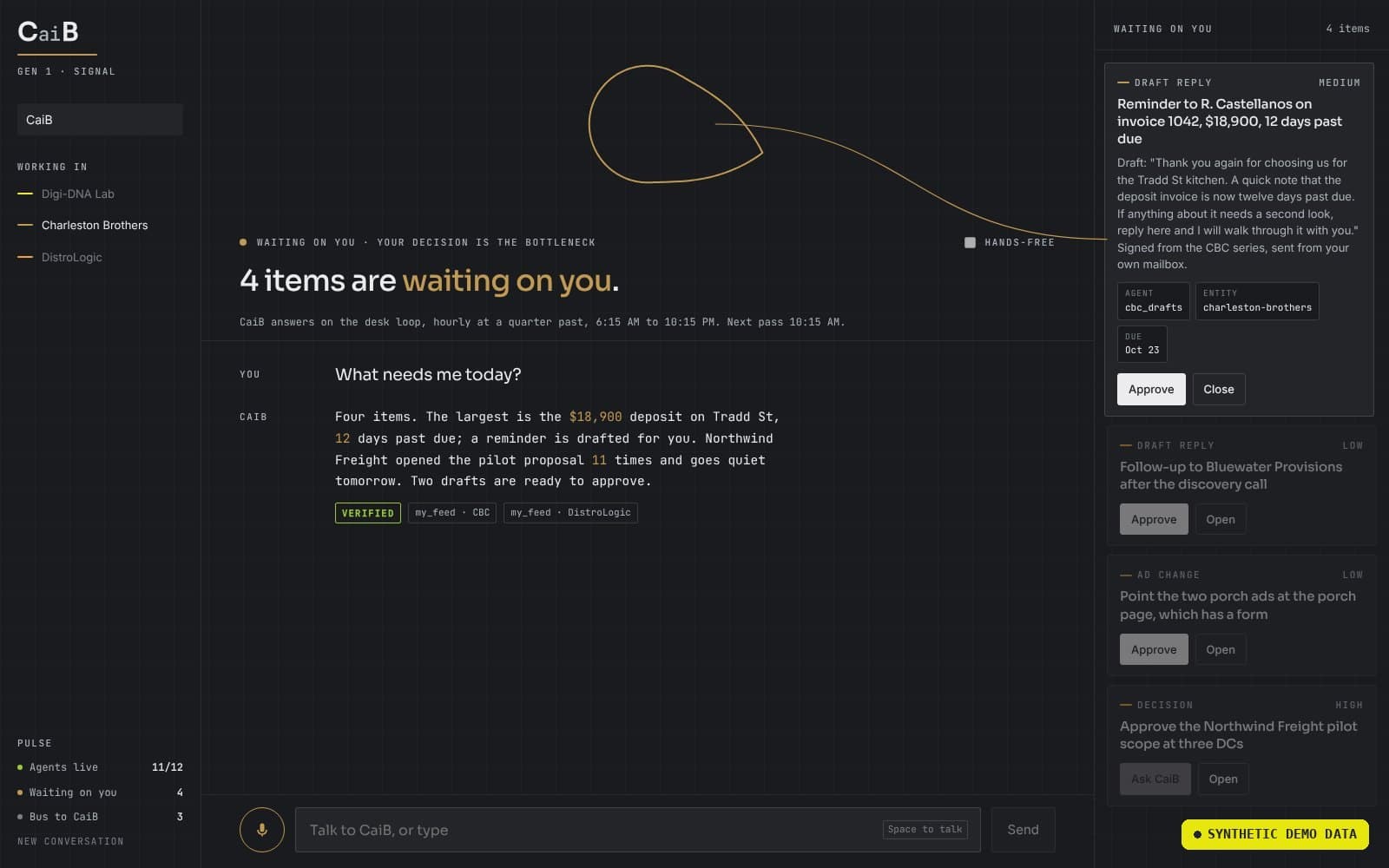
A gate only works if passing it is fast. In the operations console we built for two separate companies, a person reads the draft in place and approval sends it from their own mailbox with their own signature. Revisions are picked up hourly through the working day. The friction is a tap, not a context switch.
Write it down
Every approval is a record. Who approved what, when, against which draft. That audit trail is what lets a business trust the system enough to hand it more work next quarter.
The downside of a bad draft is a rejected draft, not a lost client.
This is the fifth primitive of the Digi-DNA Kernal in its simplest form: verification, with a human at the point where verification matters most.