


The coordinating layer.
Modern operations fragment across tools, interfaces, data, and tasks. Kernal is the orchestration layer that reduces that fragmentation — rules, constraints, verification, memory, and refinement loops that make the whole environment behave as one system.
Fragmentation is the default state of operations.
Many systems
Each tool optimizes itself. None of them optimizes the operation.
Many surfaces
People re-enter the same state into different screens, with drift at every hop.
Many truths
Copies diverge. The system has no single live state to reason over.
Many loops, none closed
Work gets assigned and executed; verification rarely returns to improve the next pass.
Five primitives. One behavior: coherence.
Rules
What the system is allowed and required to do — encoded, not tribal.
policy · routingConstraints
The hard edges: budgets, tolerances, approvals, safety envelopes.
limits · gatesVerification
Every action checked against intent. Claims become evidence.
checks · auditMemory
One live state, carried forward — the system remembers what it learned.
state · baselineRefinement loops
Outcomes feed back into rules. The environment improves with use.
feedback · tuningOne hub. Every subsystem, coordinated.
State in
Every subsystem reports into one live state.
Rules applied
Actions are routed under rules and constraints.
Work executes
People and machines act on coordinated tasks.
Evidence back
Outcomes are checked, recorded, and remembered.
Loop closes
The next pass starts smarter than the last.
Kernal is Sequence, running continuously.
The practice's method — decompose to the irreducible unit, digitize every variable, solve at the integrations — is a procedure you run on a build. Kernal is the same idea made permanent: a layer that keeps decomposing, keeps measuring, and keeps solving at the connections while the operation runs.
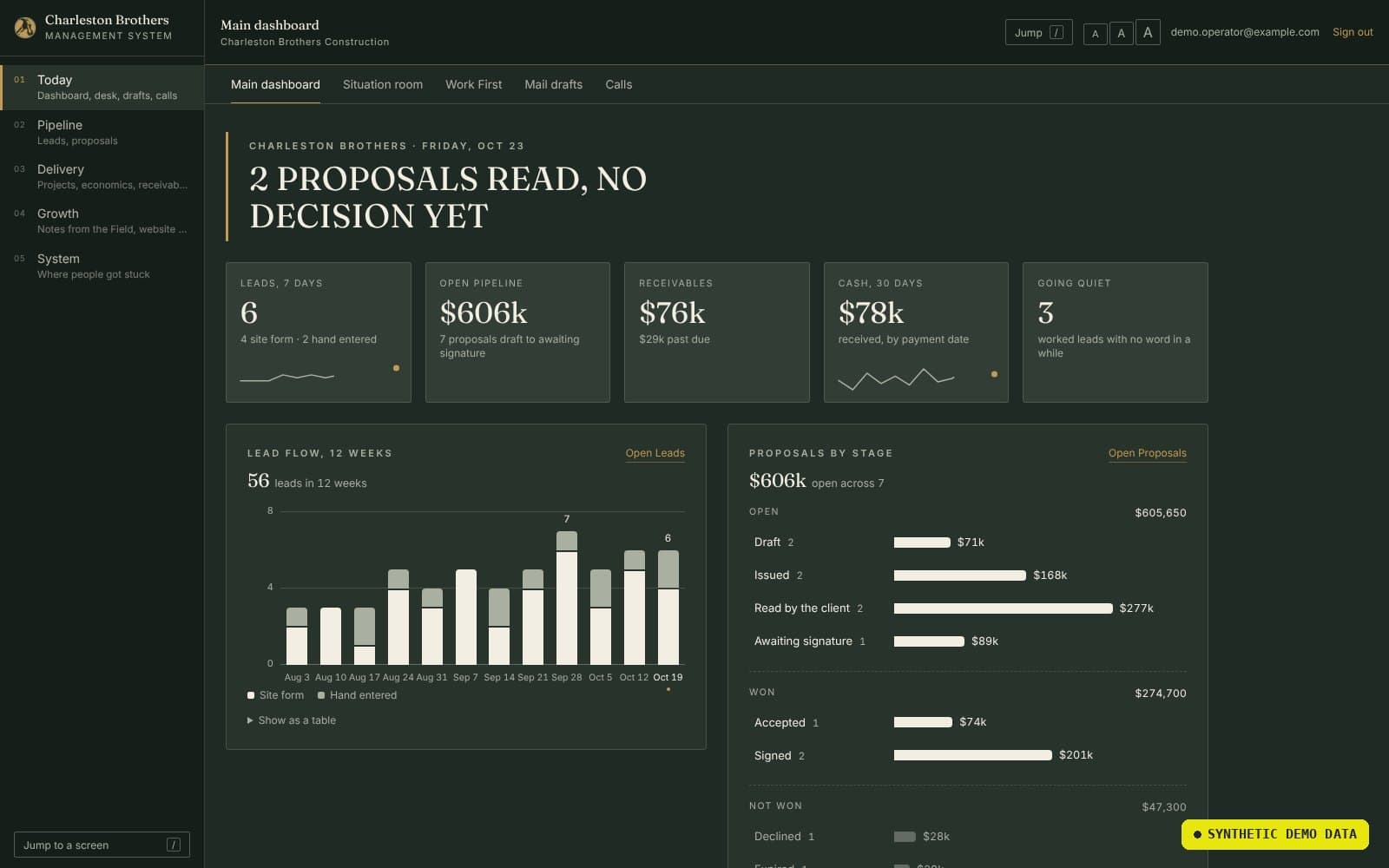
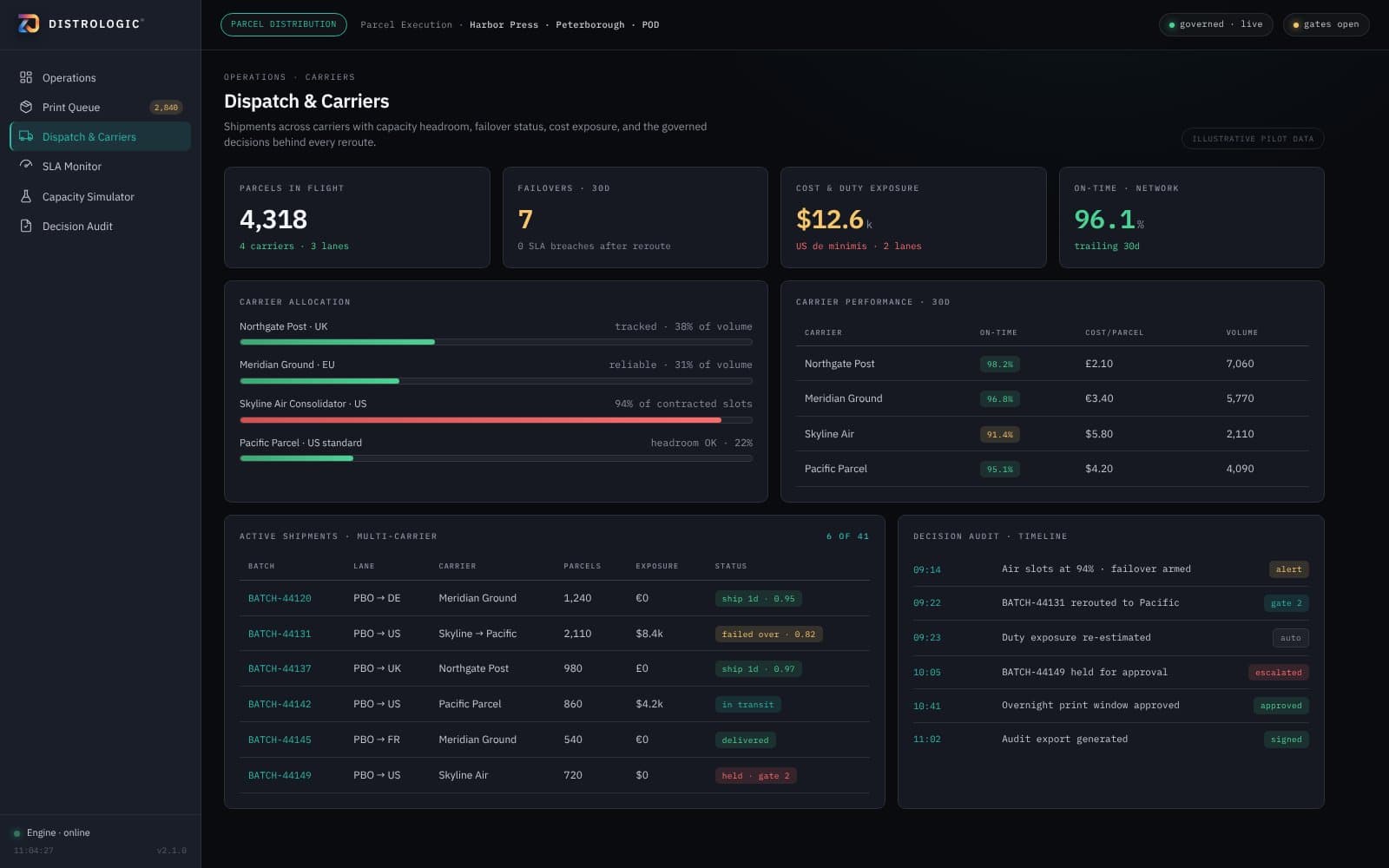
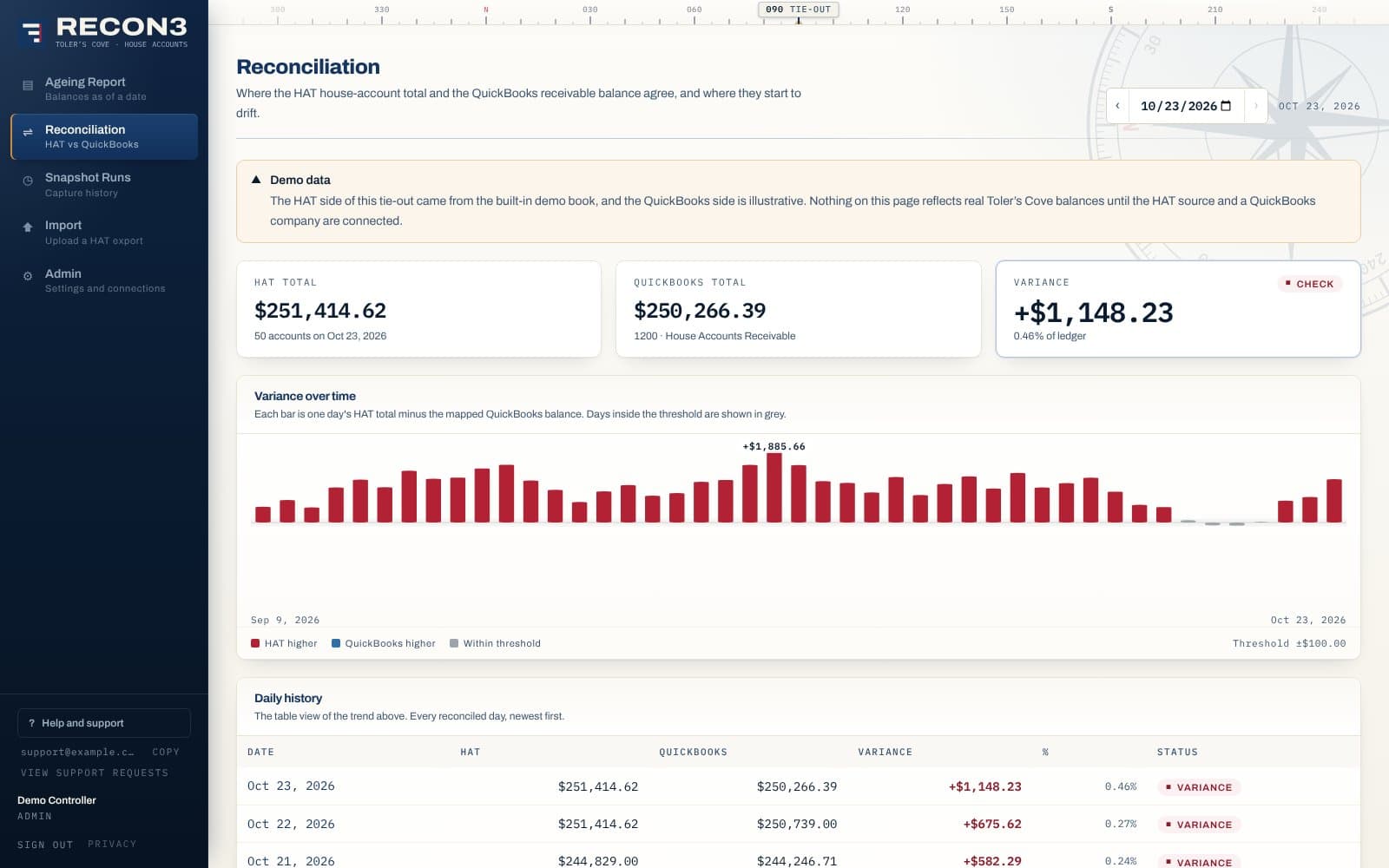
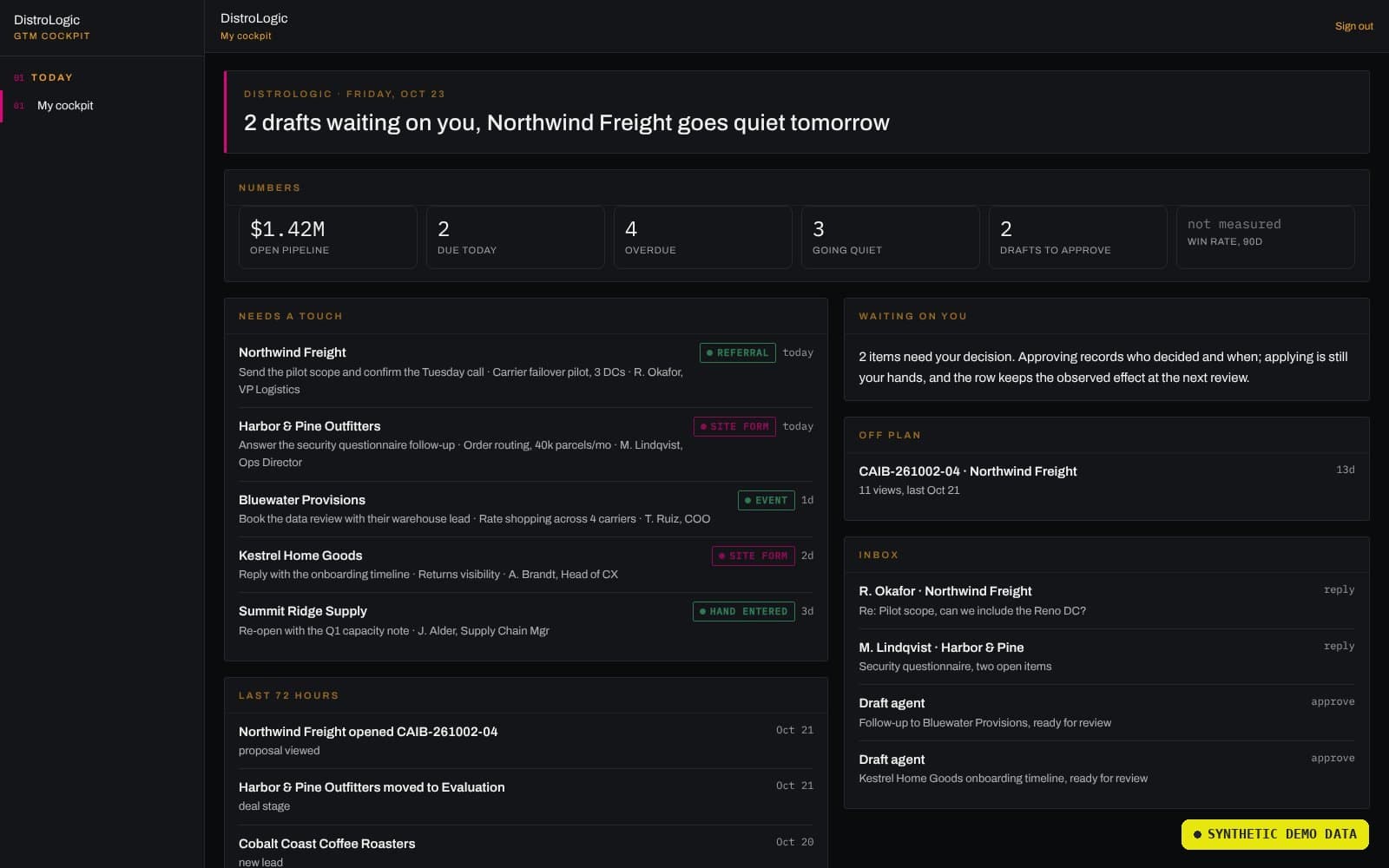
Kernal-class subsystems now run in production for separate operating clients: a general contractor’s entire back office, a logistics intelligence platform, a marina’s nightly reconciliation, and a multi-company operations console. Every one shares the same rule: agents prepare, people approve, and every consequential step is verified and written down.
Kernal, in production.
Systems built on the coordinating layer, for clients that operate as separate entities.