



A contractor's operating system
A general contractor runs on phone calls, spreadsheets, a website builder, and memory. We replaced that with one system: every lead, quote, proposal, vendor, and dollar in a single governed record, with agents doing the drafting and the owner doing the deciding.
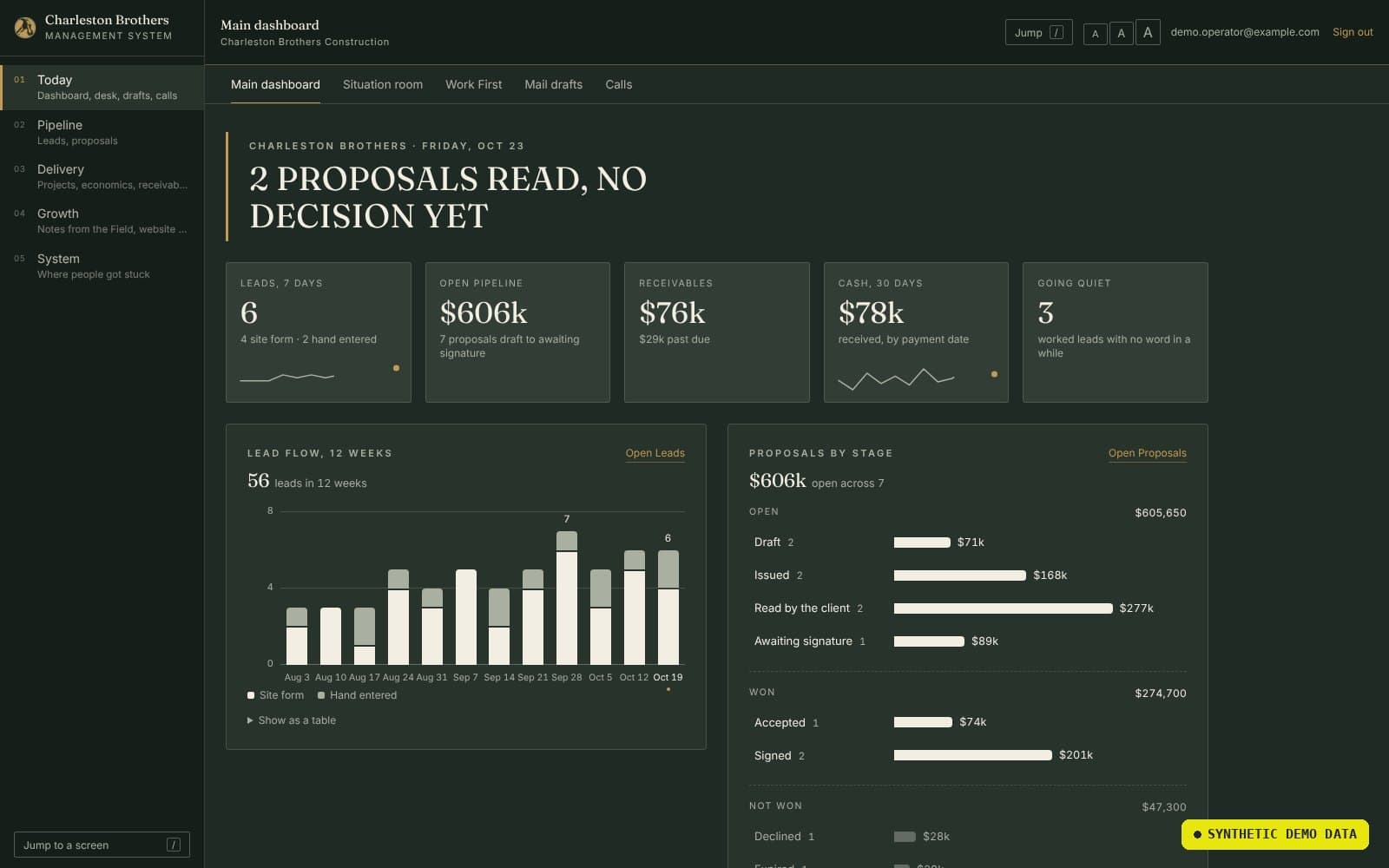
A twenty-year business running on fragments.
The work was excellent. The operation behind it was not a system. Leads arrived by form, phone, and ad platform and landed in different places. Quotes lived in spreadsheets, proposals in documents, vendors in a contact list, receivables in accounting software, and the website on a builder that could not talk to any of it. Every fragment had to be re-keyed by the one person who could least afford the time. The question was what single record the whole company could run from, and what could be safely delegated to software around it.
Decompose. Digitize. Solve at the integrations.
The Sequence method, applied end to end — the same move that runs through every Digi-DNA project.
The job is the unit
Strip the business to the record that everything else hangs from: a job, moving from lead to quote to proposal to work to payment. Every other function is a view of that record or an action on it.
One governed record
Move every fragment into a single Postgres system of record: leads, quotes, proposals, projects, vendors, receivables, telemetry. Retire the spreadsheets and the paid grid tool. Mask and access-log sensitive vendor data by design.
Agents draft, people decide
Wire the integrations that used to be manual: intake scoring, AI-assisted quoting, proposal drafting, ad-platform lead disputes and conversion uploads, search-content publishing. Every agent writes drafts only. Nothing sends, prices, or publishes without the owner's approval.
Agents never send mail and never write to the codebase. They prepare. The owner approves.
This is Kernal in a working company: one live state, coordinated subsystems reading from it, verification at every boundary, and a human at every irreversible step. The same pattern is now being generalized so other contractors could run on it.
Screens and features.
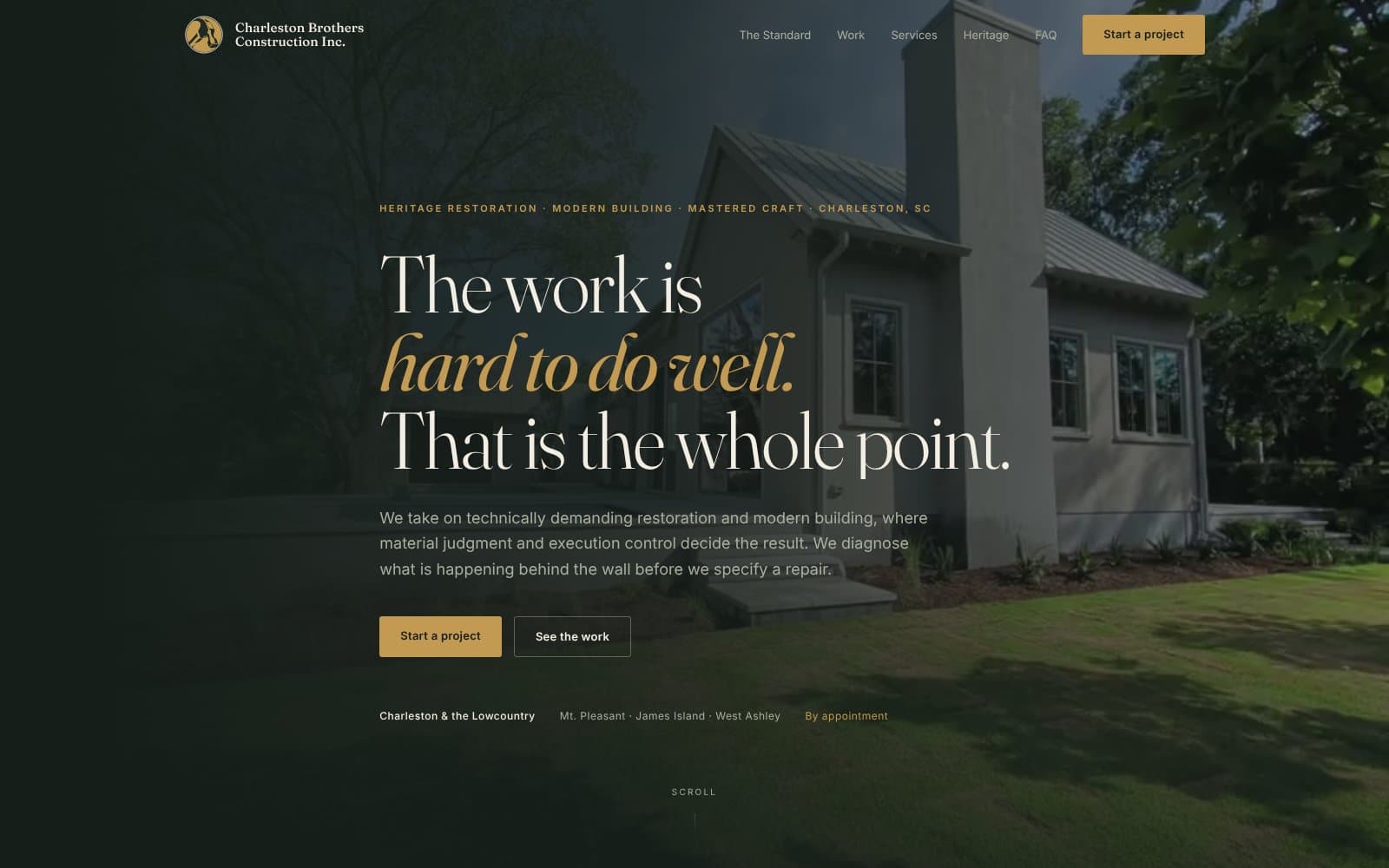
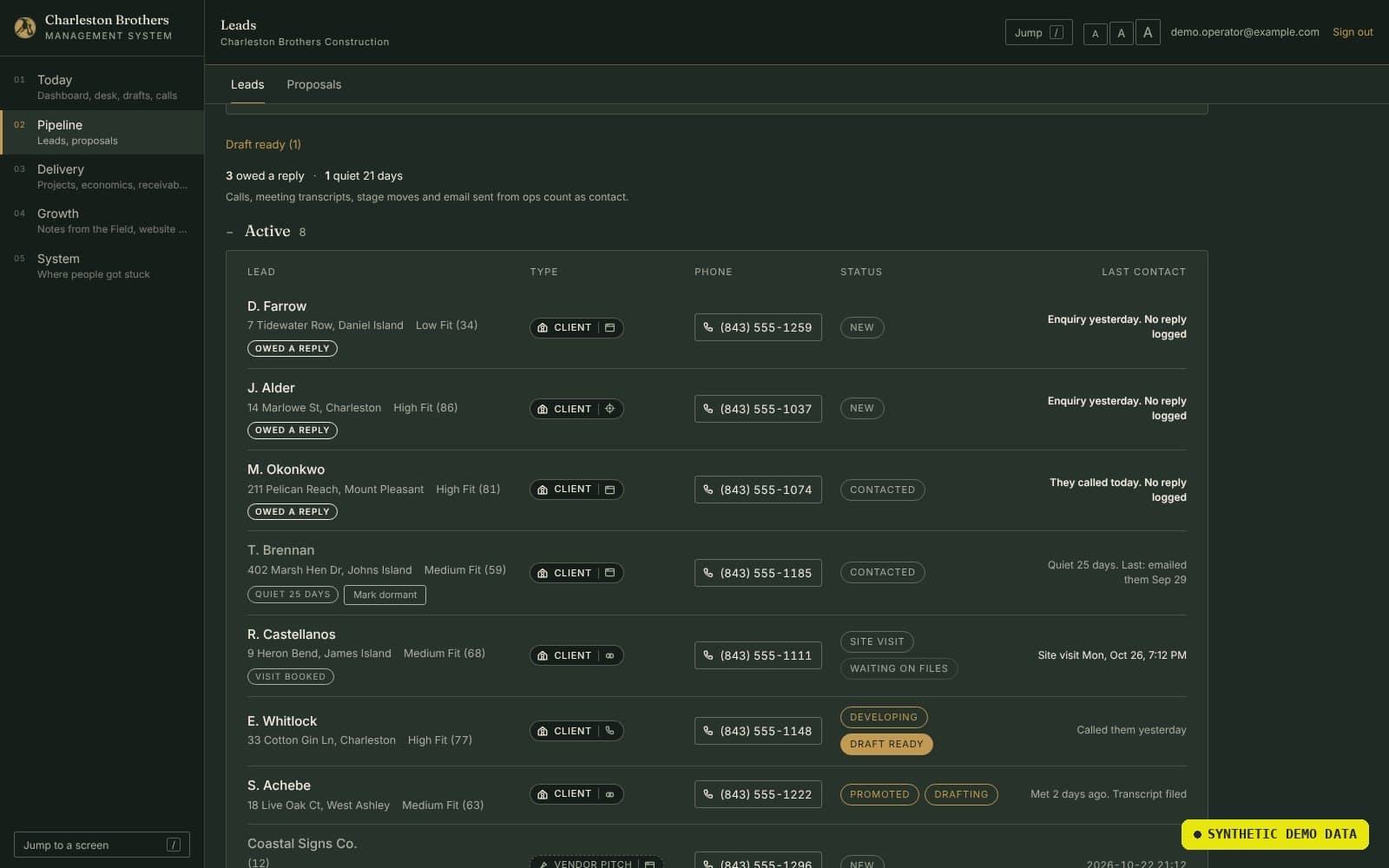
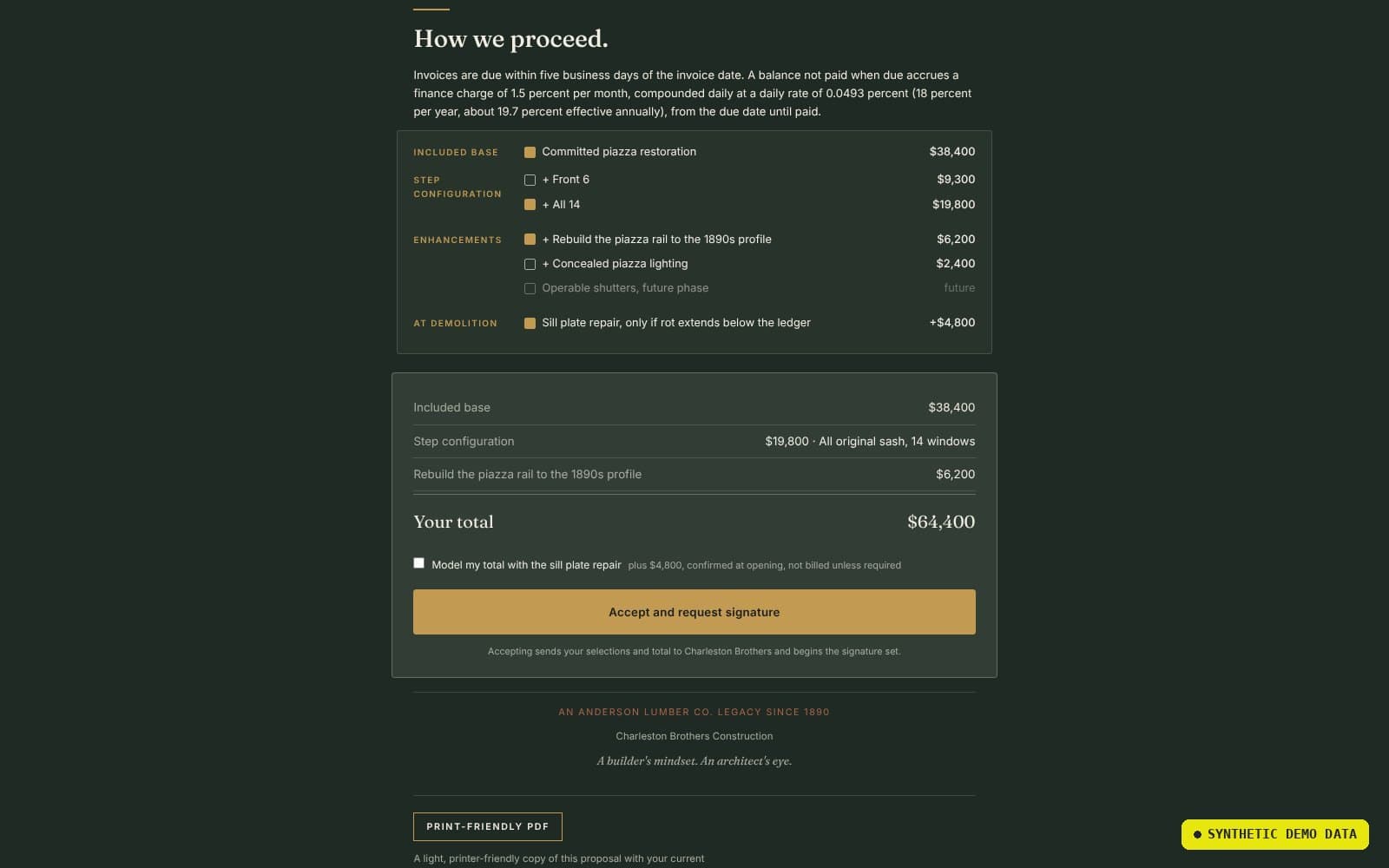
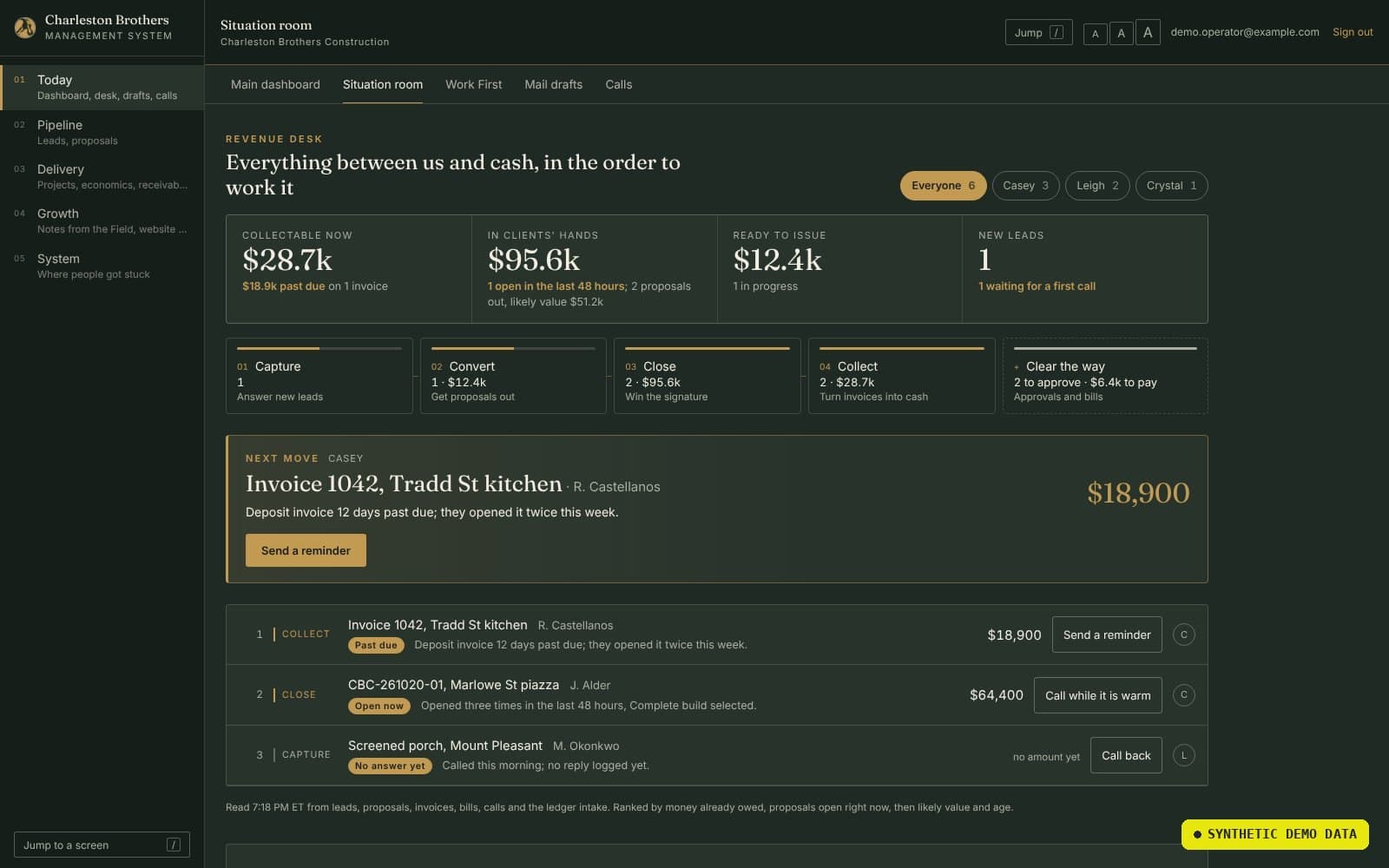
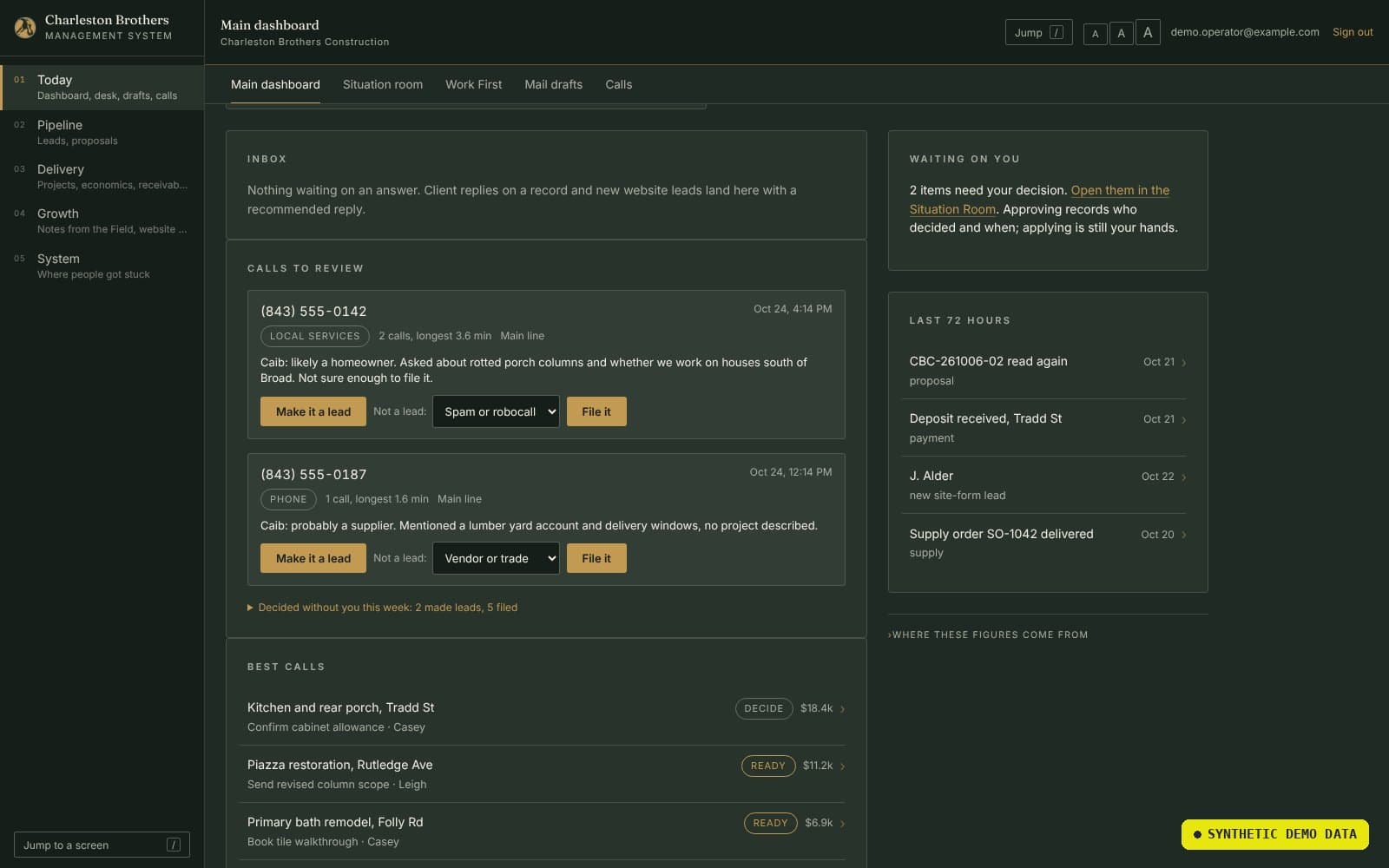
One record. Every function.
- 23 operating modules — leads, proposals, receivables, vendors, economics, calls, supply, and a situation room, all reading one system of record.
- Governed automation — 13 edge functions, 6 scheduled jobs, and a roster of drafting agents, under a standing rule that no agent sends, prices, or publishes on its own.
- Acquisition, closed-loop — ad-platform lead disputes filed programmatically and qualified leads uploaded back as conversions, with a read-only guardrail agent reviewing spend every weekday.
- Search content on a cadence — an article drip that opens a reviewed pull request twice a month; the owner's merge is the publish step. Fourteen articles live.
- Spreadsheets retired — the paid grid tool and website builder replaced by one owned stack.