First to the Atlantic: a marina's front door
The marina's best fact is geography: it is the first slip to open water. The new site is built around that fact, in a visual language taken directly from the marina's own flag.
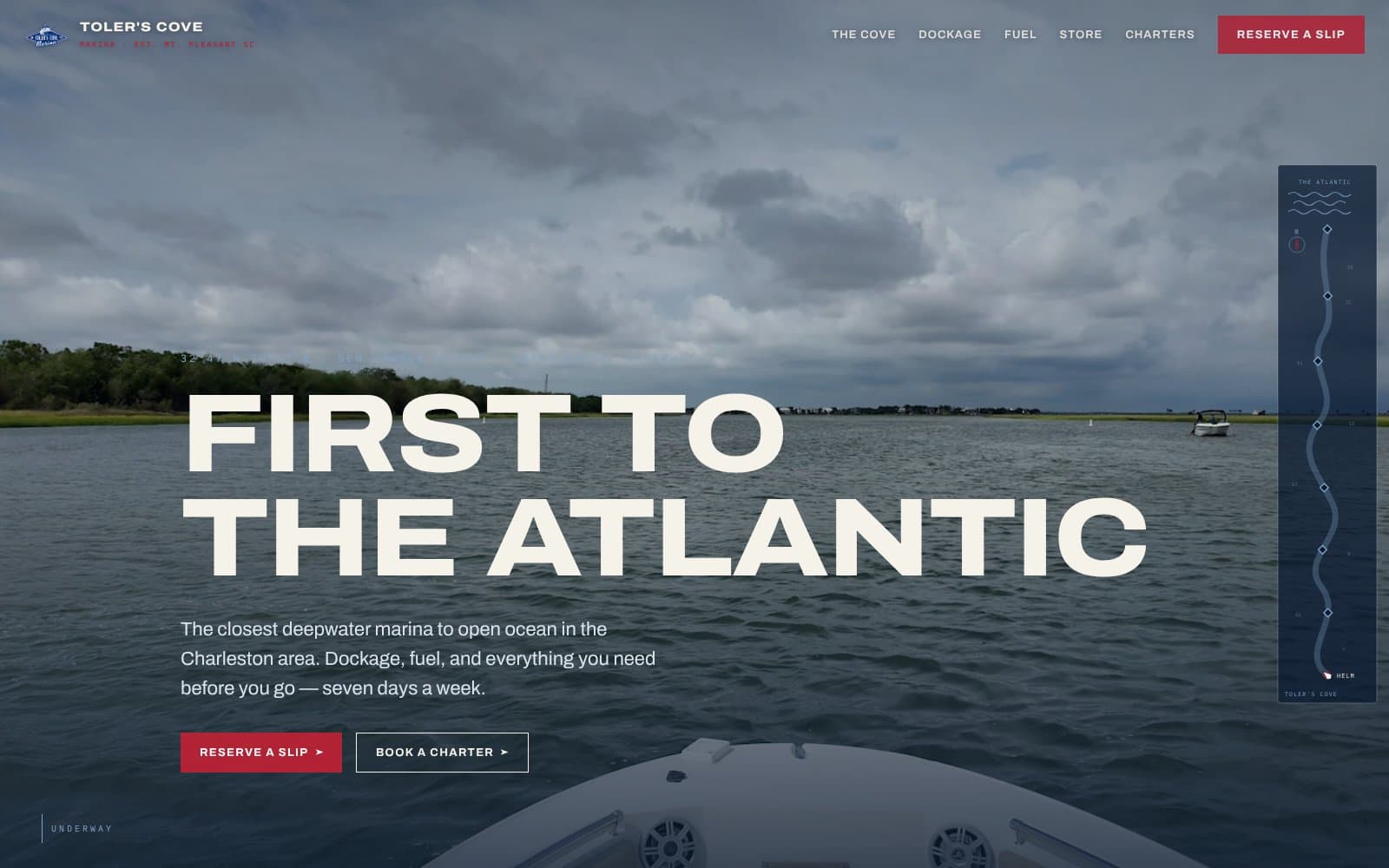
A strong place with a generic presence.
The marina's previous site was a builder template with a generic look. Nothing in it said why this harbor and not the next one. The question was what single idea makes this marina legible, and what visual system already belongs to it.
Decompose. Digitize. Solve at the integrations.
The Sequence method, applied end to end — the same move that runs through every Digi-DNA project.
One idea
Reduce the marina's story to the irreducible fact a boater cares about: first to the Atlantic.
The burgee as source
Derive the palette from the T and C signal flags in the marina's burgee: six colors, paired with a grotesk and a monospace that read like a chart legend. Capture the existing site with owner authorization: twelve pages and 82 media files.
Navigation as a chart
Rebuild as a single, framework-free page with momentum scrolling, a chart-style navigation, and a water ripple layer, so the site behaves like the place it describes.
Even a website runs Sequence: find the one fact, take the system from what already exists, and make the parts behave as one experience.
The live site, section by section.
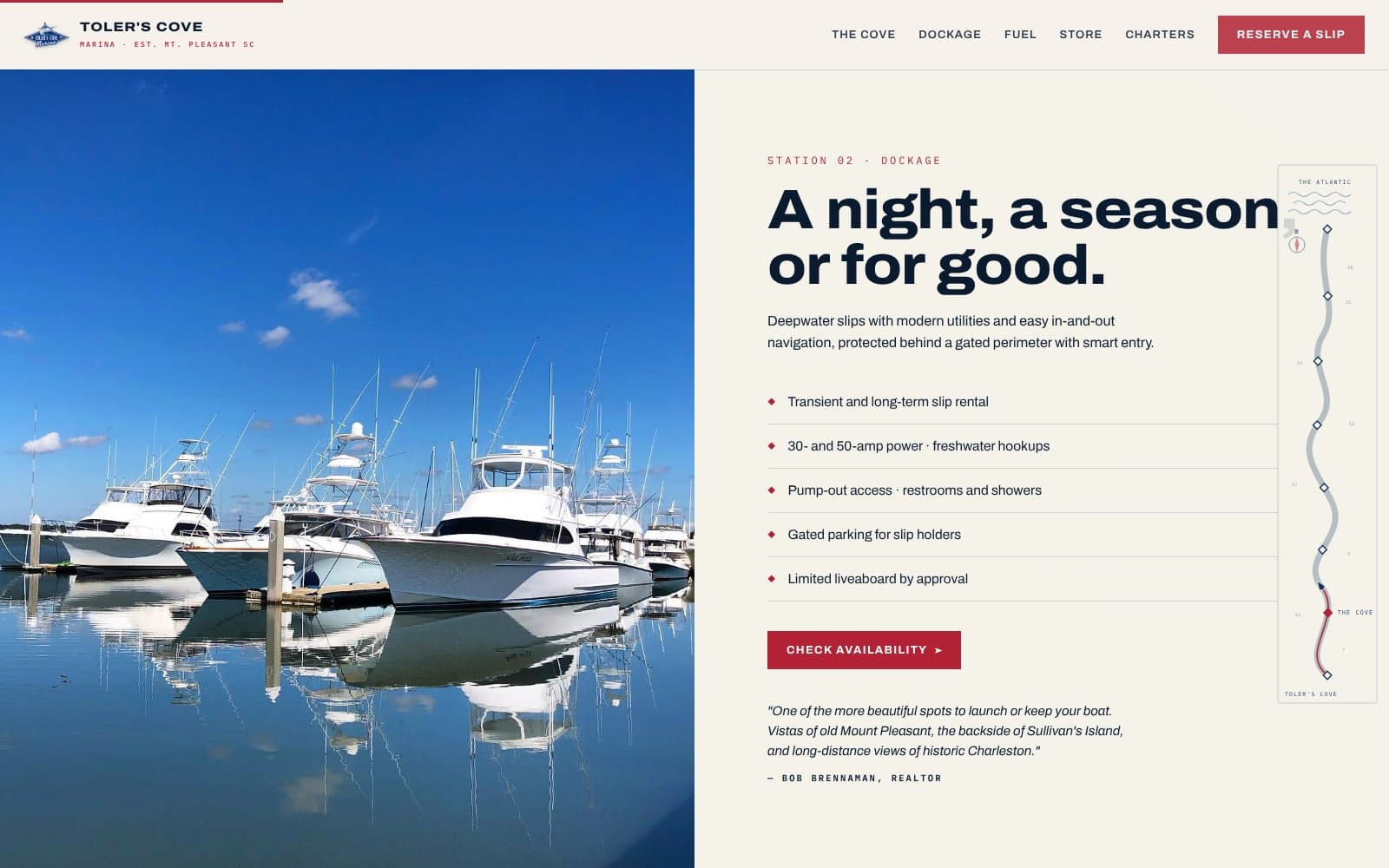
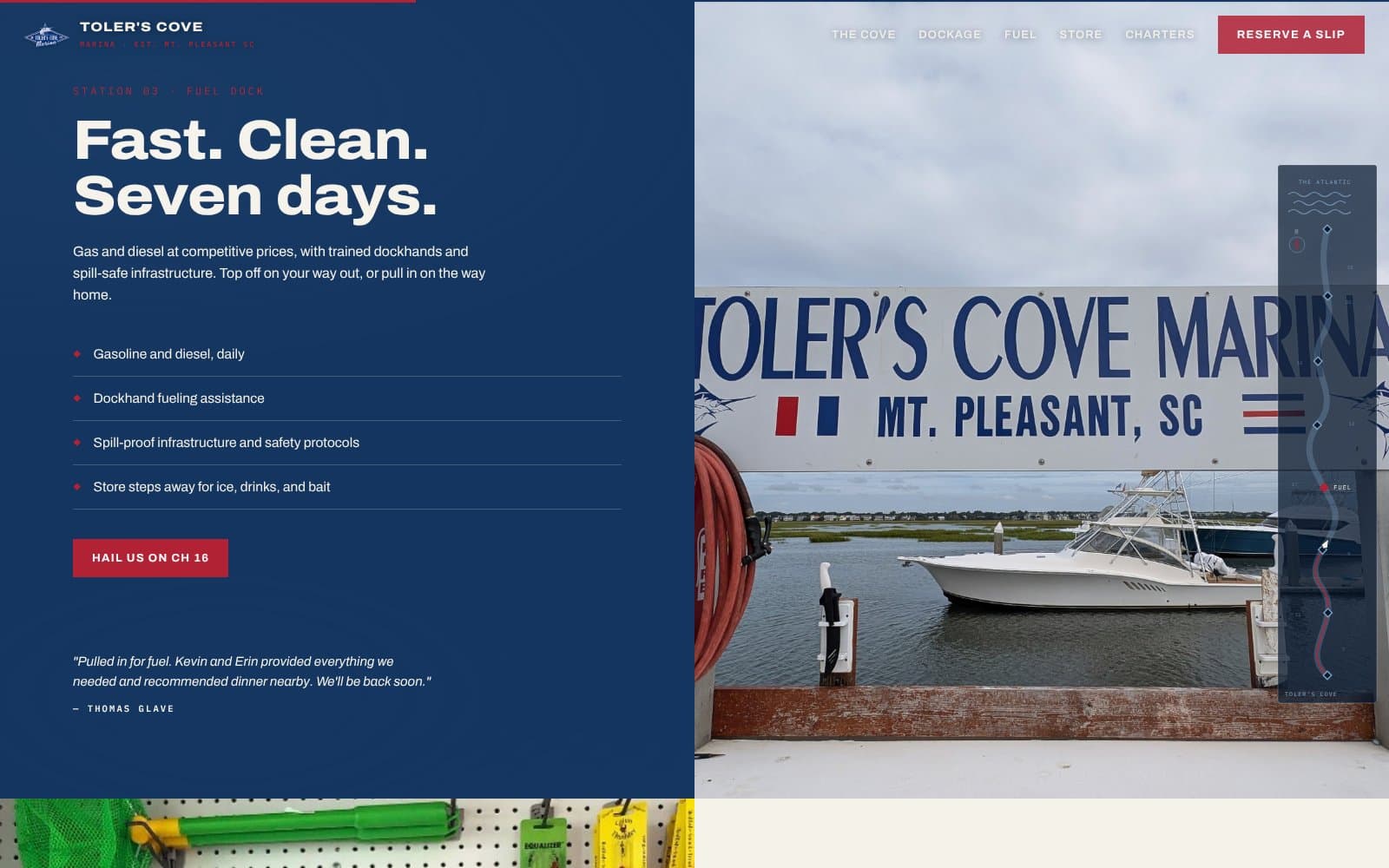
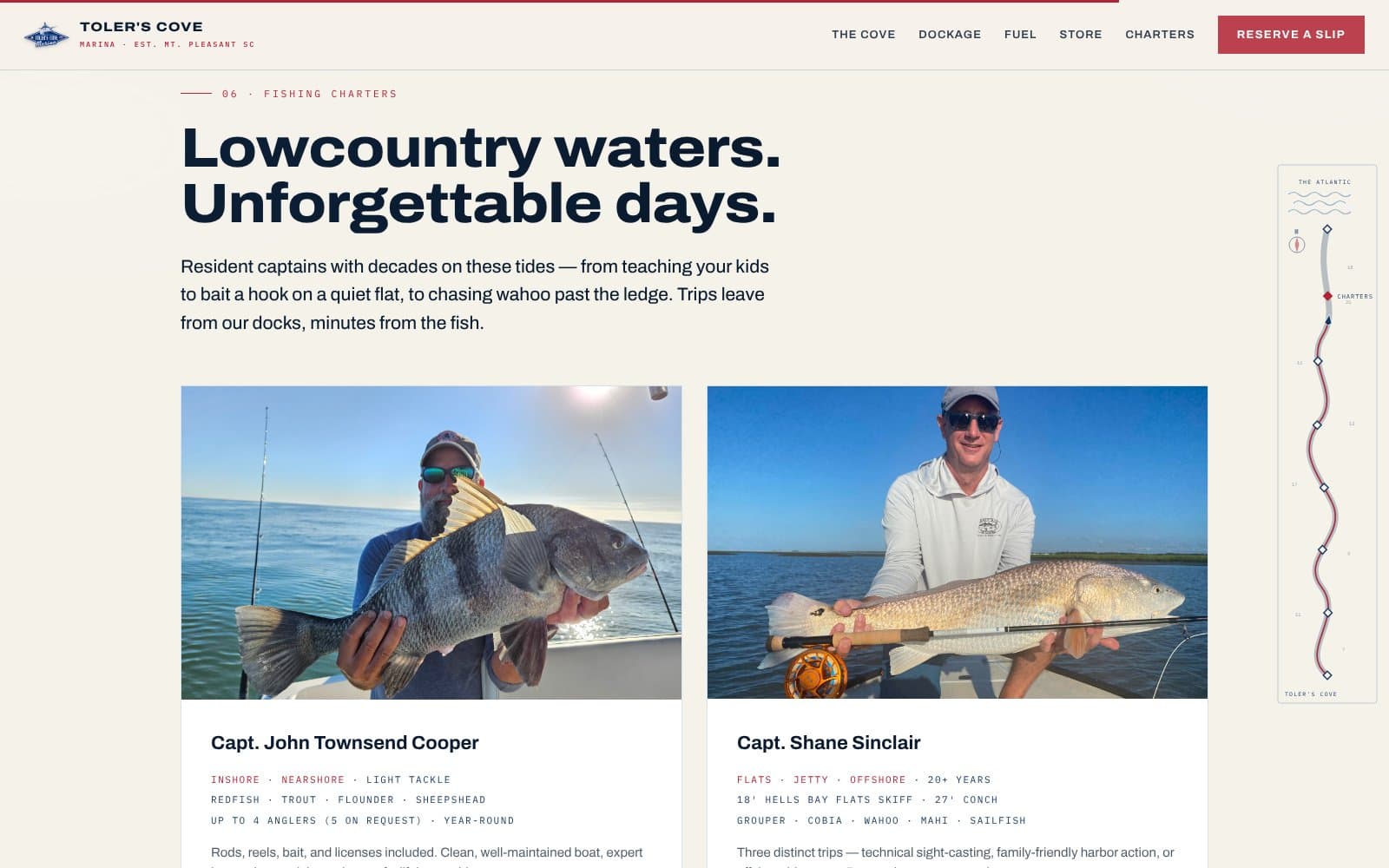
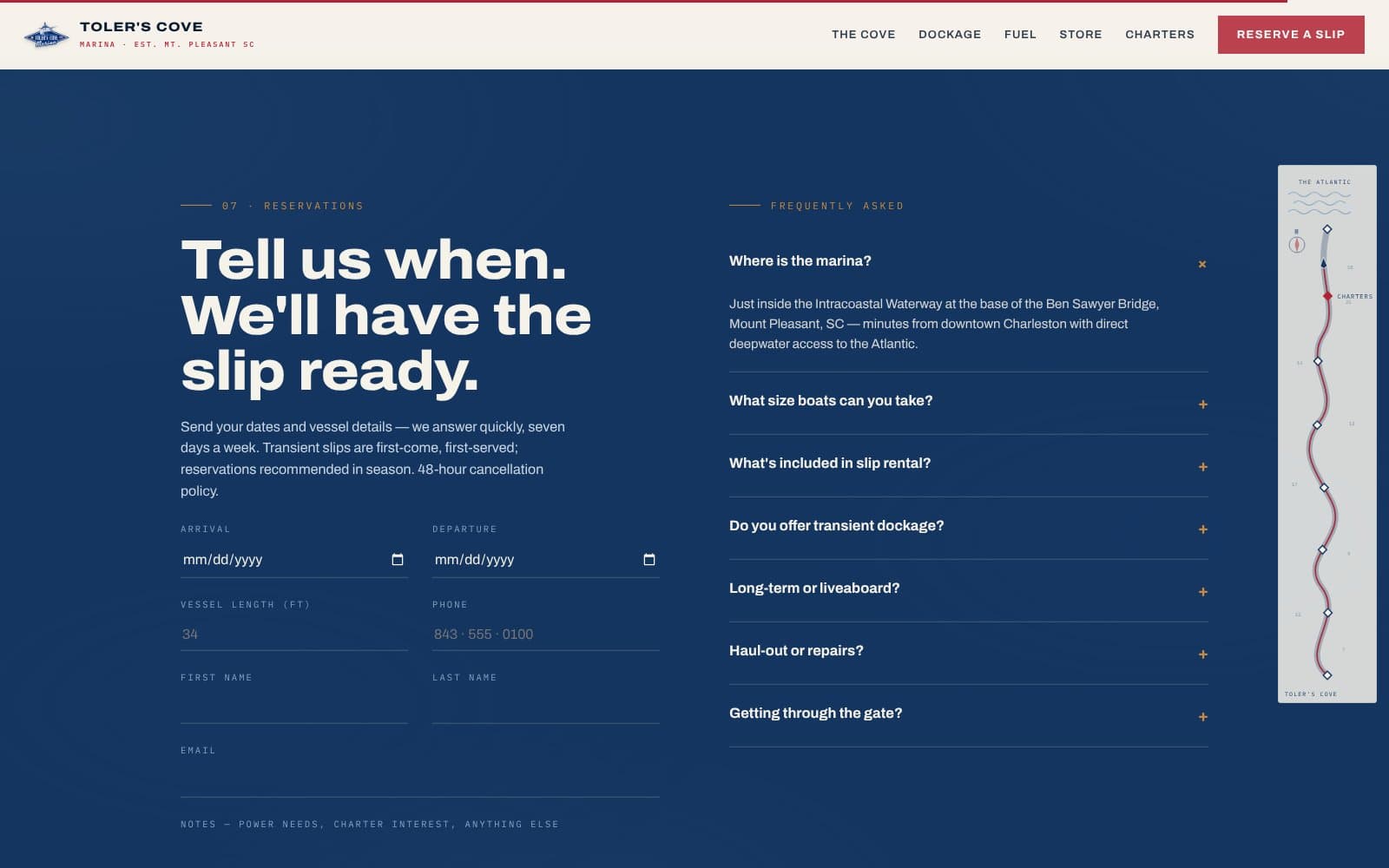
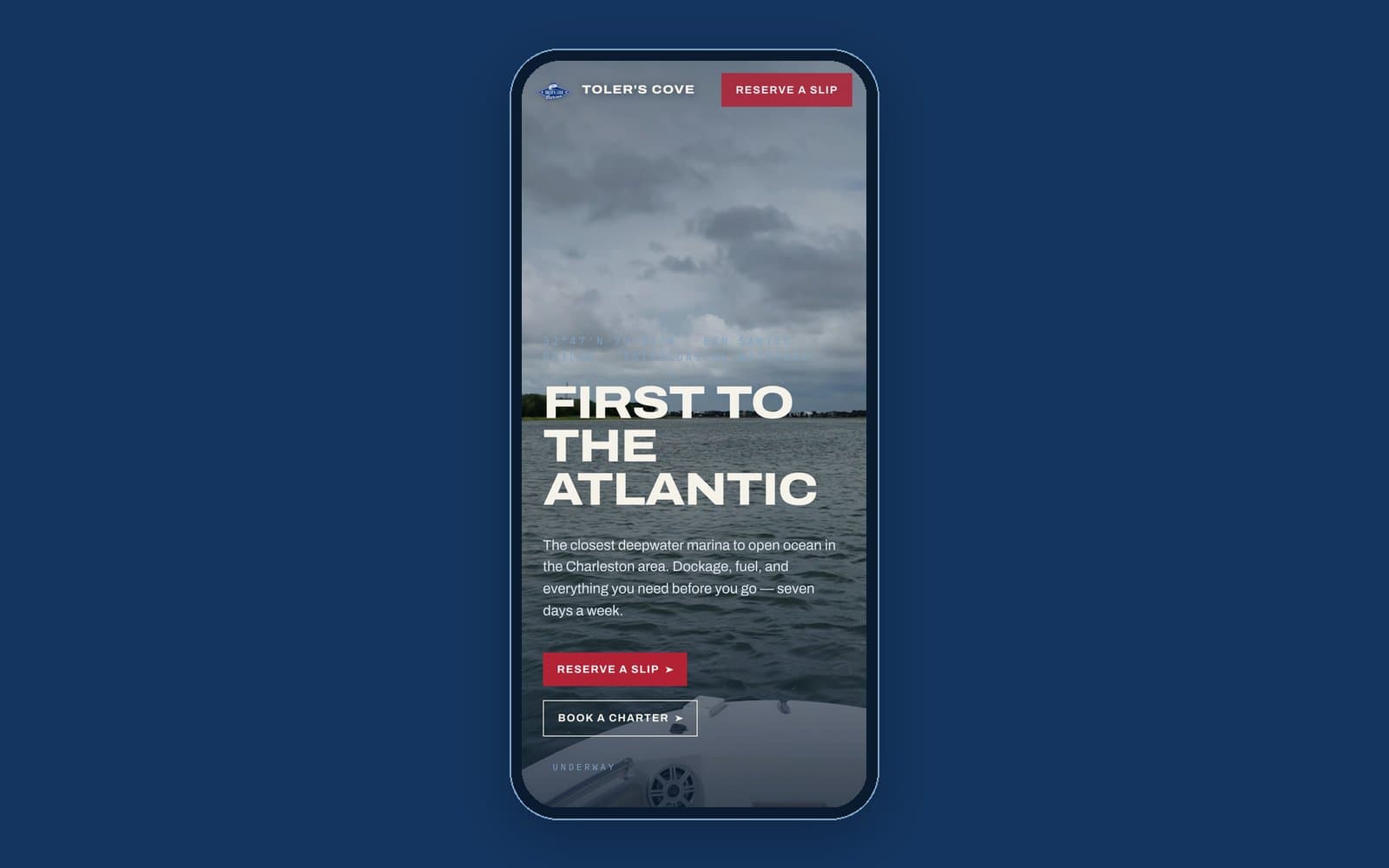
The place, made legible.
- An owned identity — a six-color system taken from the marina's own signal flags, not a template.
- No framework dependency — one hand-built page, fast and portable.
- Live in production — the full prior site captured with owner authorization, rebuilt, approved by the client, and serving tolerscovemarina.com.