



Governed logistics intelligence
Shipping across borders means many carriers, many rules, and no single picture of cost or risk. We architected the platform that coordinates them, plus the public front door that explains it.
Many carriers. Many rules. No coordinating layer.
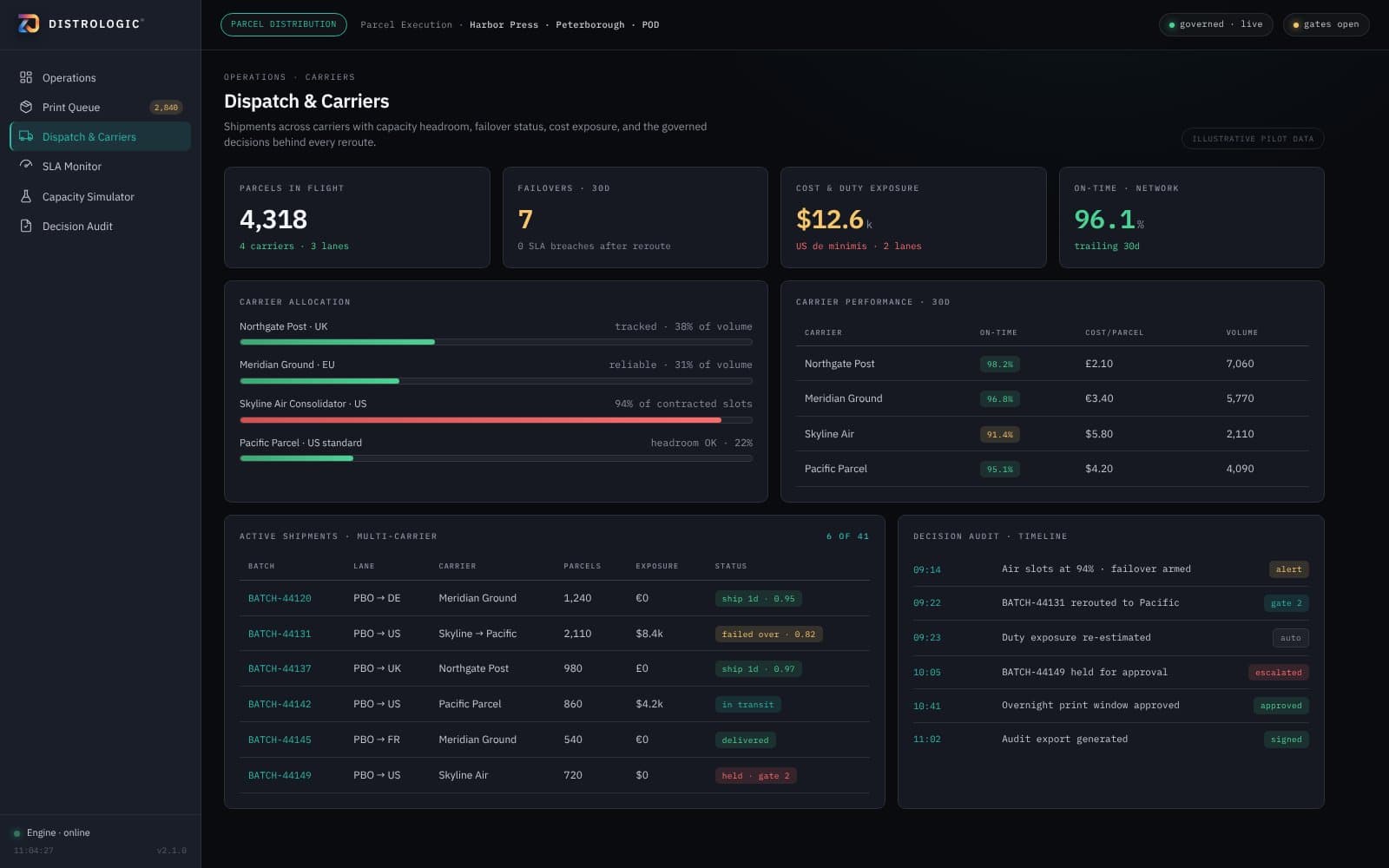
A merchant shipping internationally works across separate carrier accounts, customs regimes, marketplaces, and tariff schedules. Each system knows its own piece. None knows the whole shipment, so tariff exposure stays invisible until the invoice arrives and a single carrier outage becomes an operational outage. The question was how to make carriers, customs, cost, and commerce behave as one governed system without hiding the risk from the operator.
Decompose. Digitize. Solve at the integrations.
The Sequence method, applied end to end — the same move that runs through every Digi-DNA project.
The shipment decision
Reduce logistics to the decision that matters: how this shipment should move, at what cost, under which rules, with what evidence. Everything else feeds that decision.
Every variable, labelled honestly
Capture carrier, customs, cost, and marketplace state into one model. Figures that are modeled are labelled as modeled estimates. International shipments require customs documents before they move.
Carrier-agnostic, failover-ready
Solve at the carrier boundary: one orchestration layer above many carriers, with an active failover path, human approval gates on consequential actions, and an audit record for every step.
The architecture is the practice's coordinating layer applied to trade: one live state, many subsystems, rules and constraints enforced at the edges, and verification written down. Mechanism detail stays private; the outcome is the proof.
Screens and features.
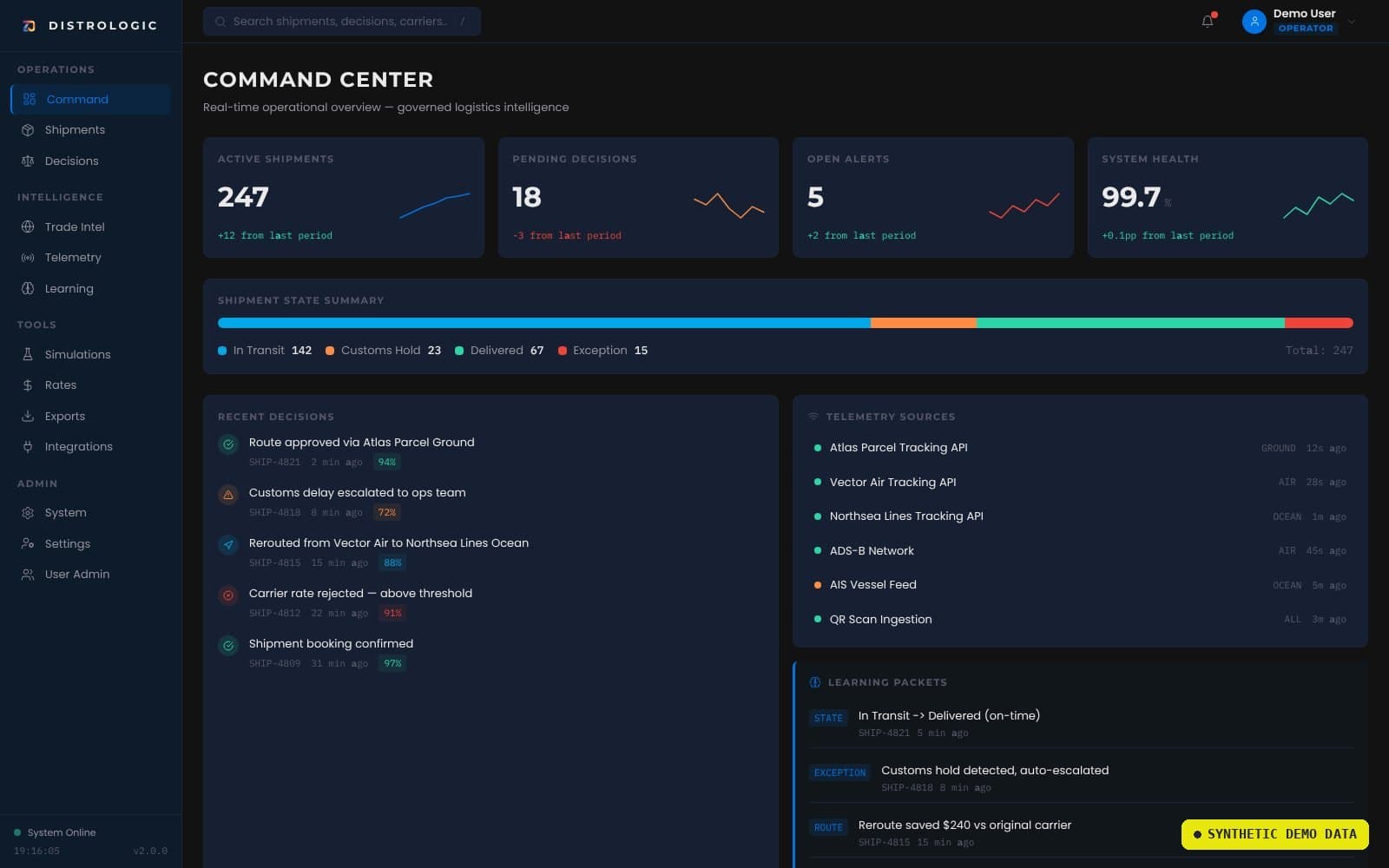
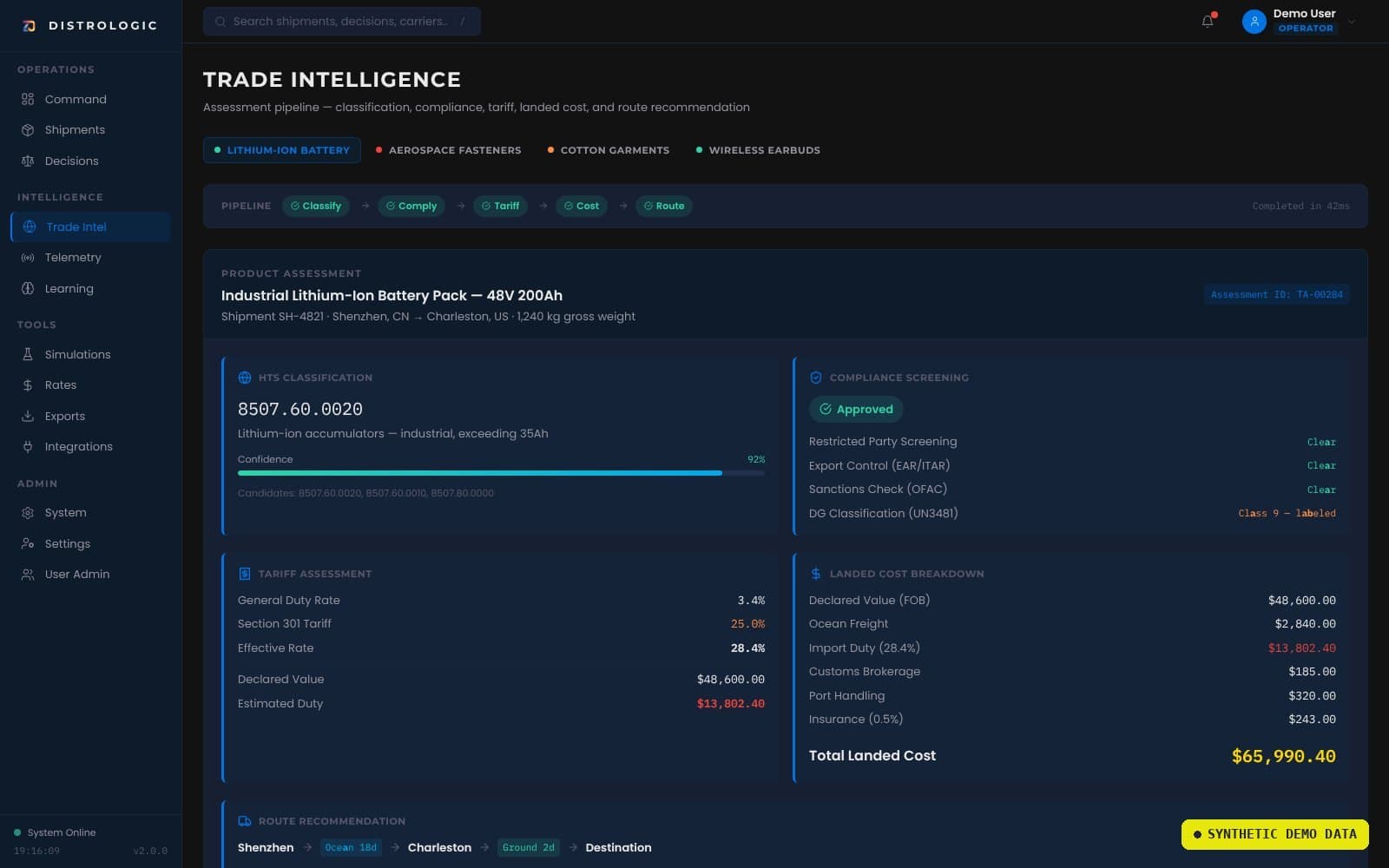
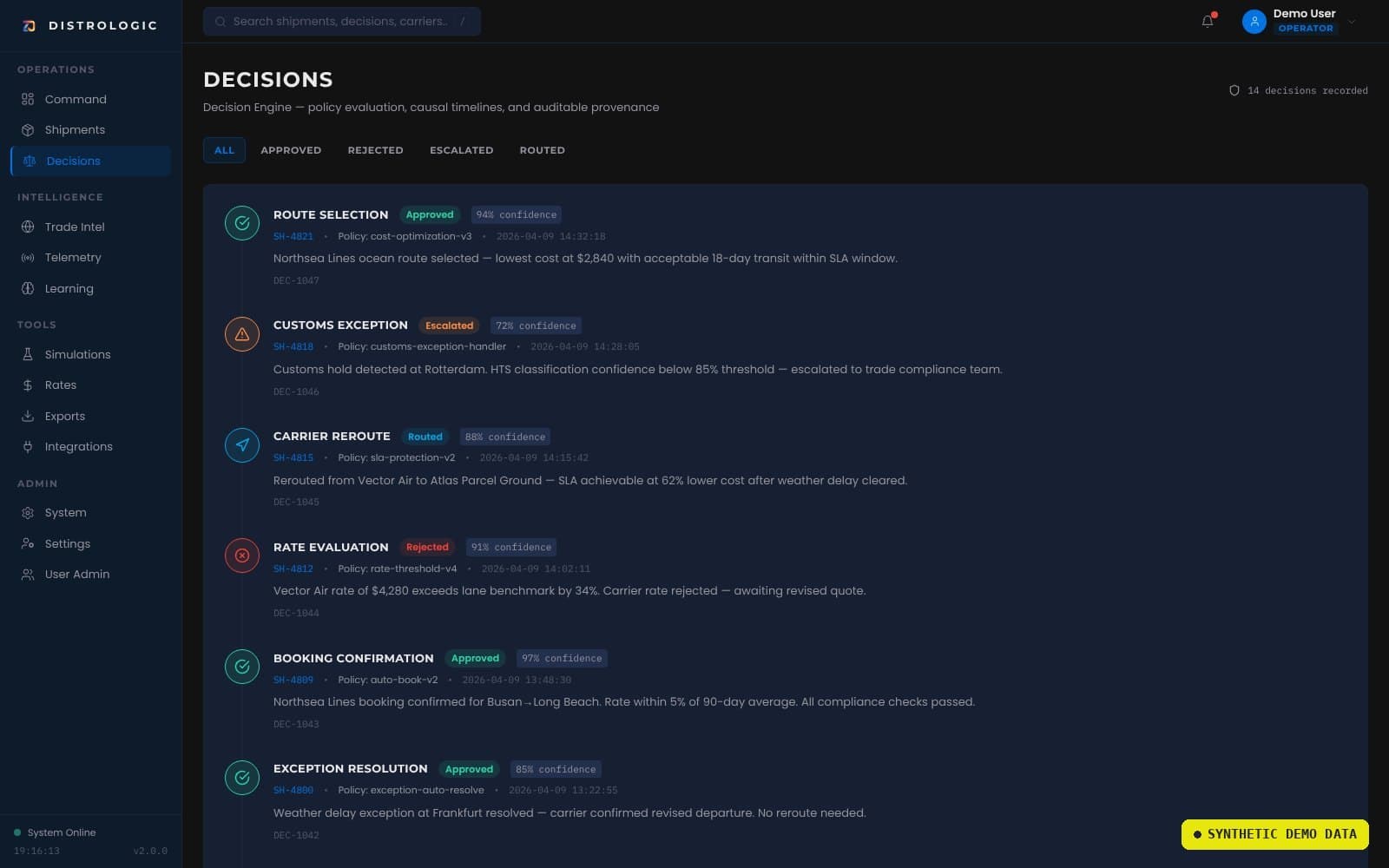
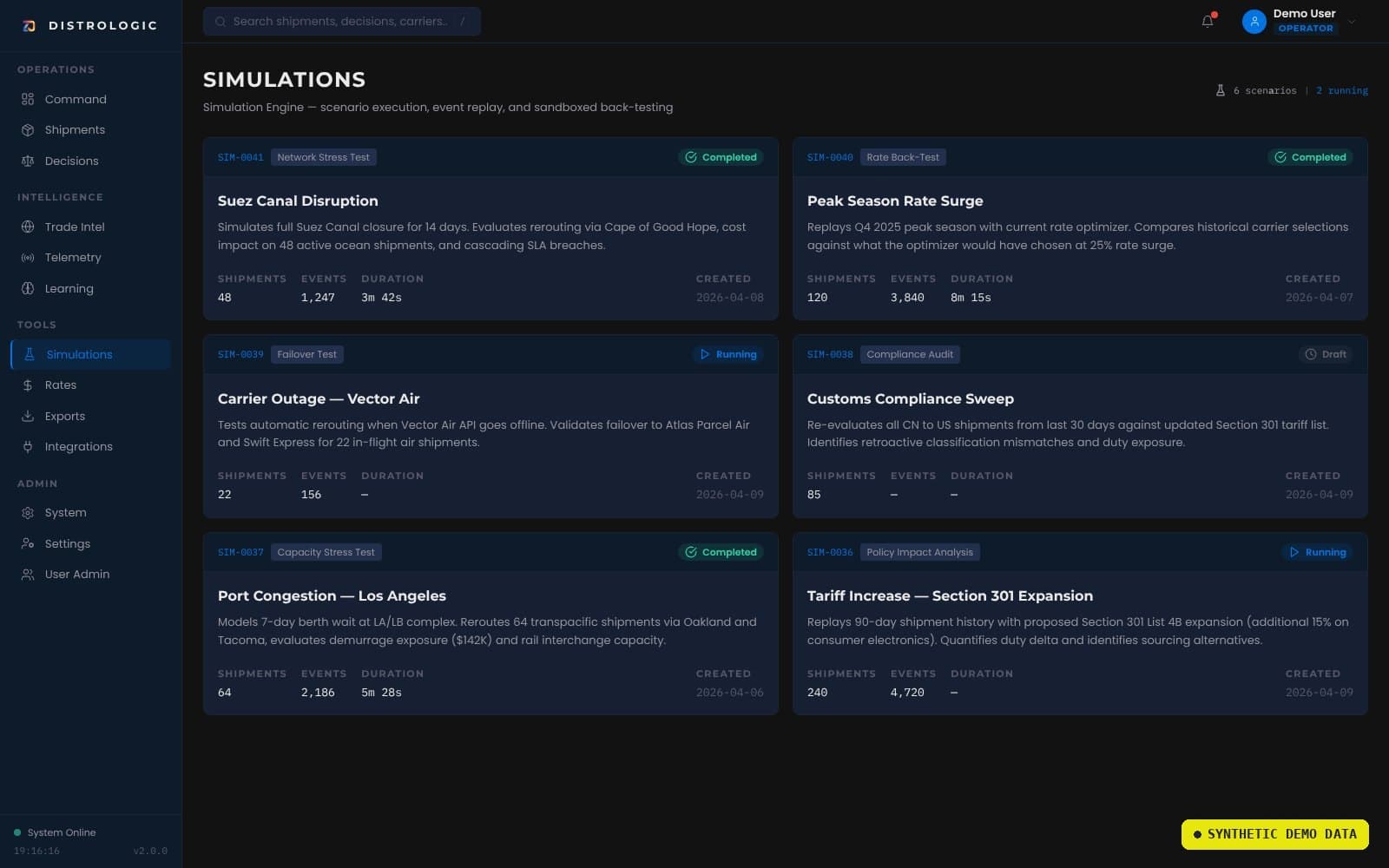
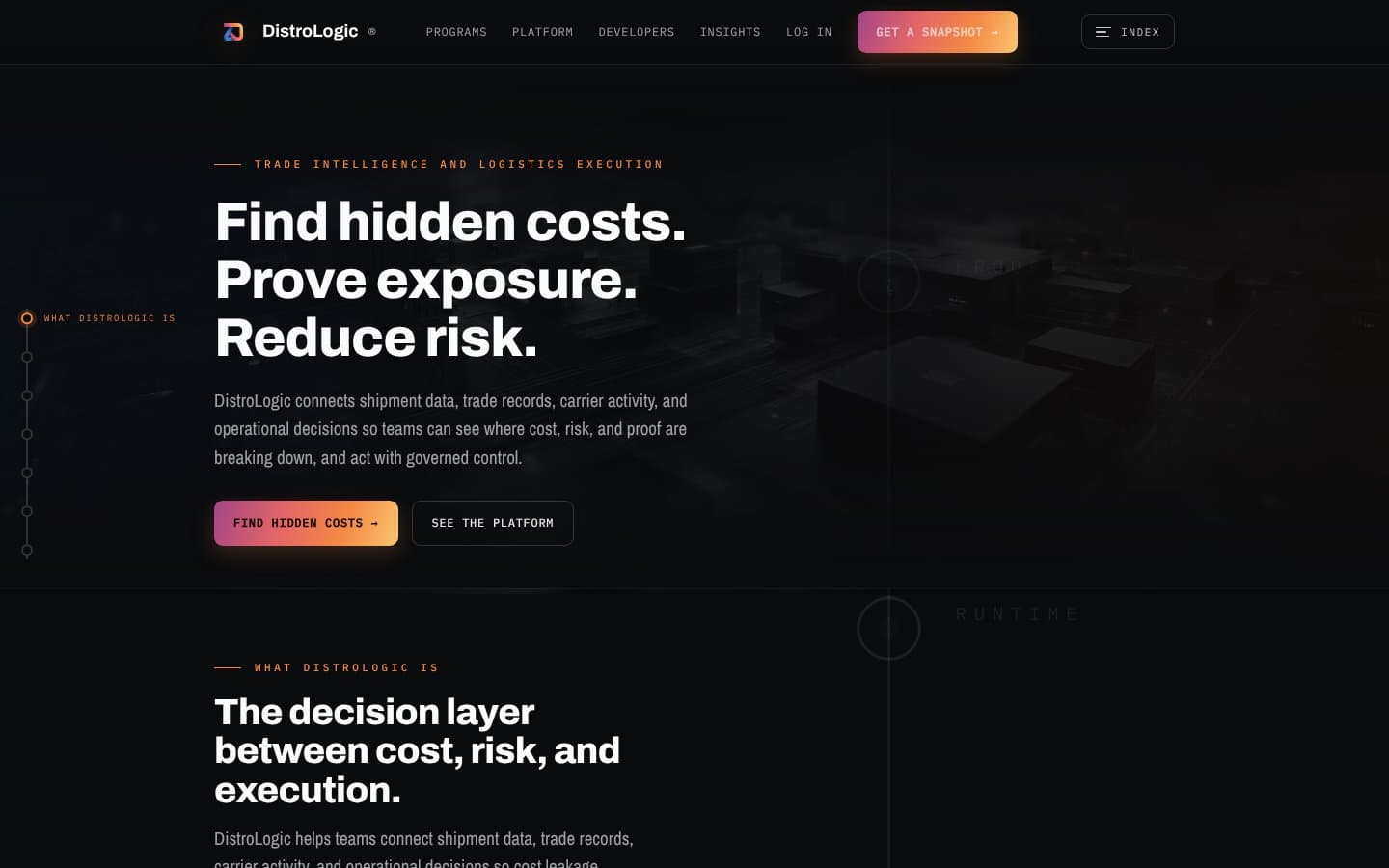
One governed picture of the shipment.
- Carrier-agnostic orchestration — multiple carriers behind one layer, with live failover tested against an active secondary carrier.
- Commerce app with safeguards — nine capability modules and 34 automated tests; the storefront remains the only source of truth for stock and price, and incomplete listings are never pushed.
- Audit by default — every action logged; webhook signatures verified; required privacy webhooks in place.
- Front door and engine, separated — a public marketing site and a governed operational platform on distinct surfaces, so brand iteration never touches production.