



An independent press, rebuilt to its own guidelines
A press is judged by its typography before a word is read. We built the imprint an identity system first, then rebuilt its catalog to obey it.
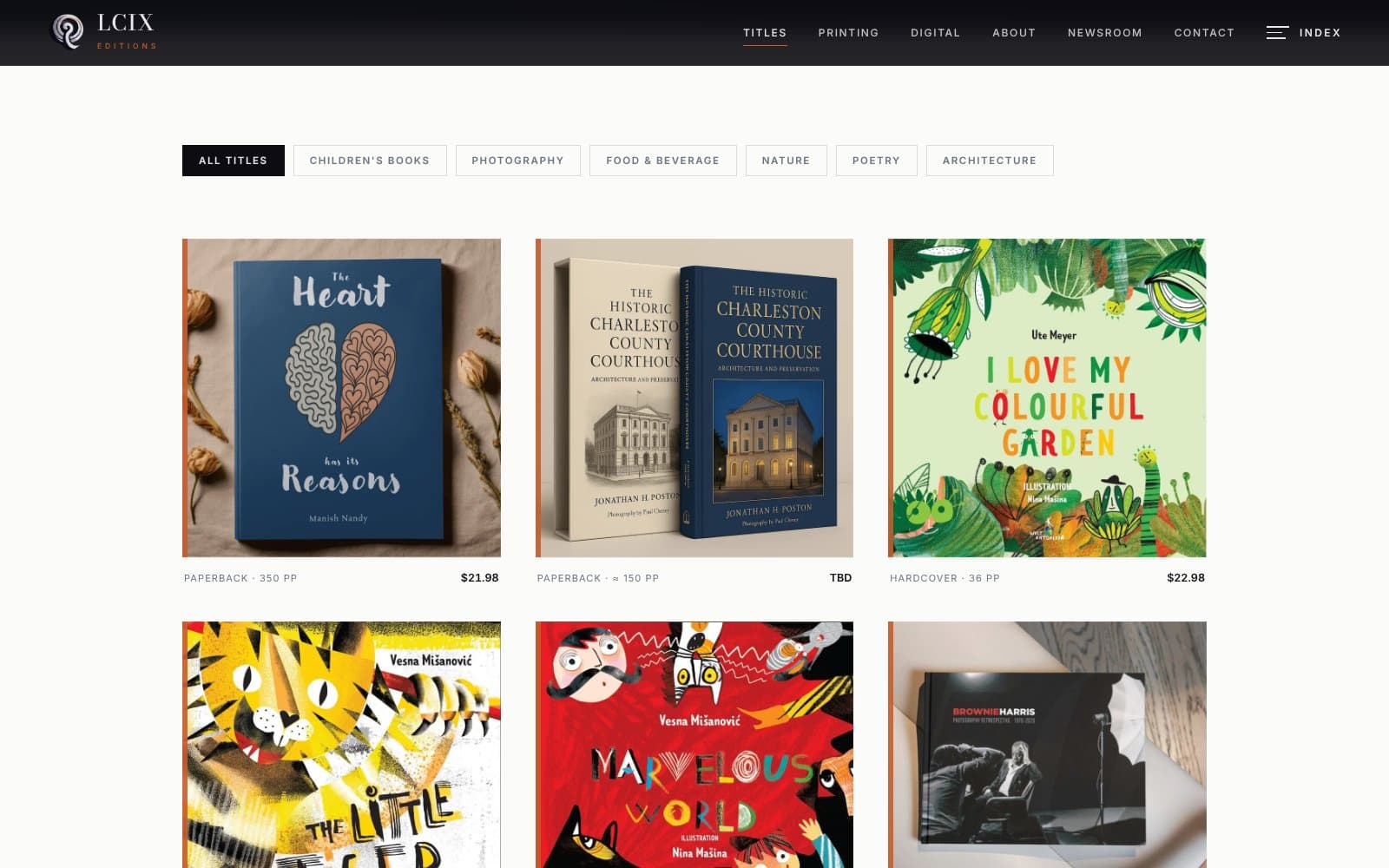
A serious list with an unserious shell.
The imprint publishes poetry, architecture, and children's books, but its site did not carry the same craft as its books. There was no governing identity, so every page made its own decisions. The question was what system would let the site look like it came from the same hands as the books.
Decompose. Digitize. Solve at the integrations.
The Sequence method, applied end to end — the same move that runs through every Digi-DNA project.
The page as a book page
Reduce the site to the unit a reader already trusts from the imprint: a well-set page.
An identity system
Define the system: a high-contrast didone display face, a text serif, and a grotesk for interface; a palette with regional provenance; a tide-pattern endpaper; and a seasonal accent program.
Catalog to guidelines
Rebuild the catalog from the live content, twelve titles across six categories with press and news, on a static generator with self-hosted fonts and redirects for every legacy URL.
Identity is a coordinating layer too: one set of rules that makes every page behave as part of the same system.
The live site, section by section.

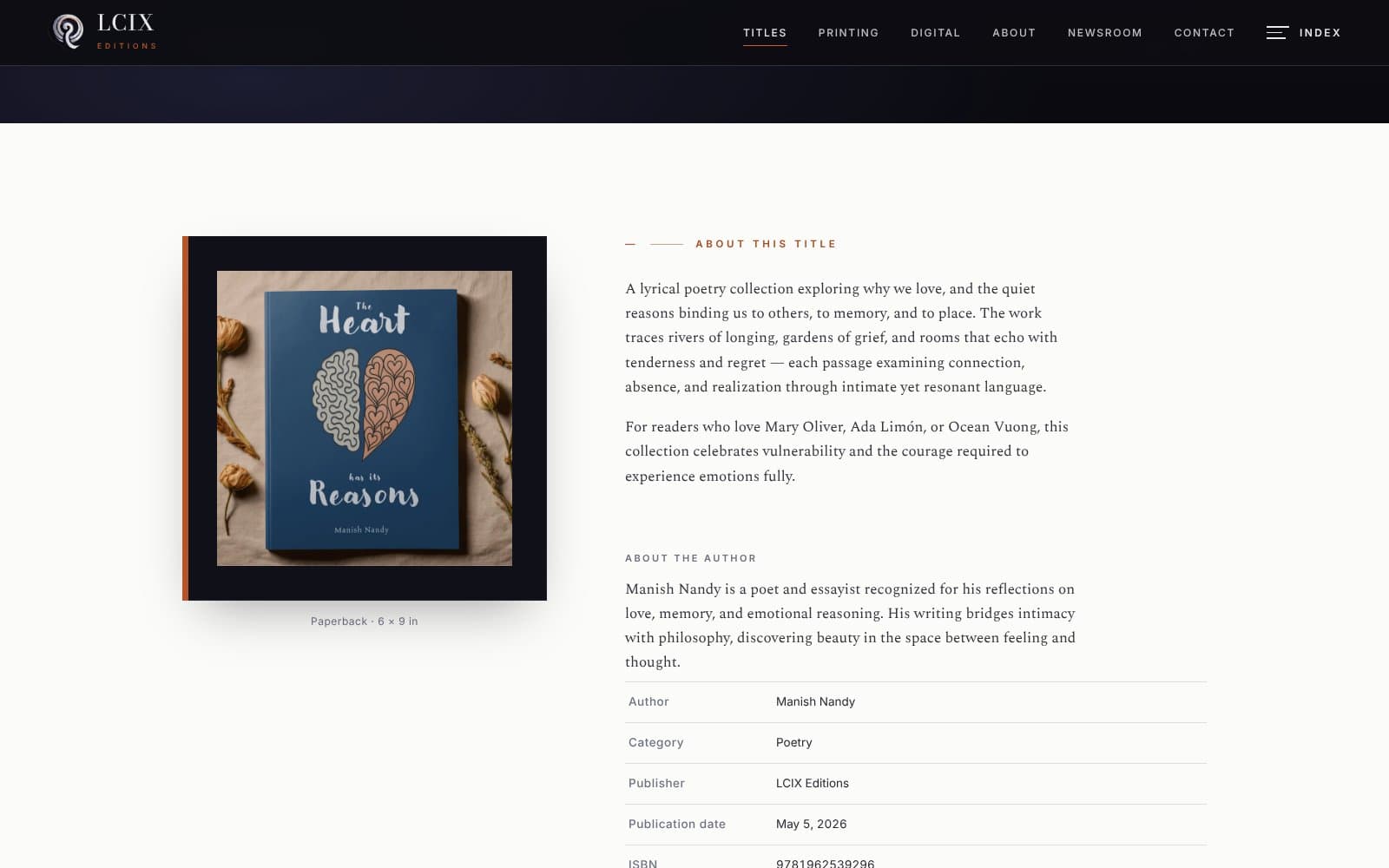
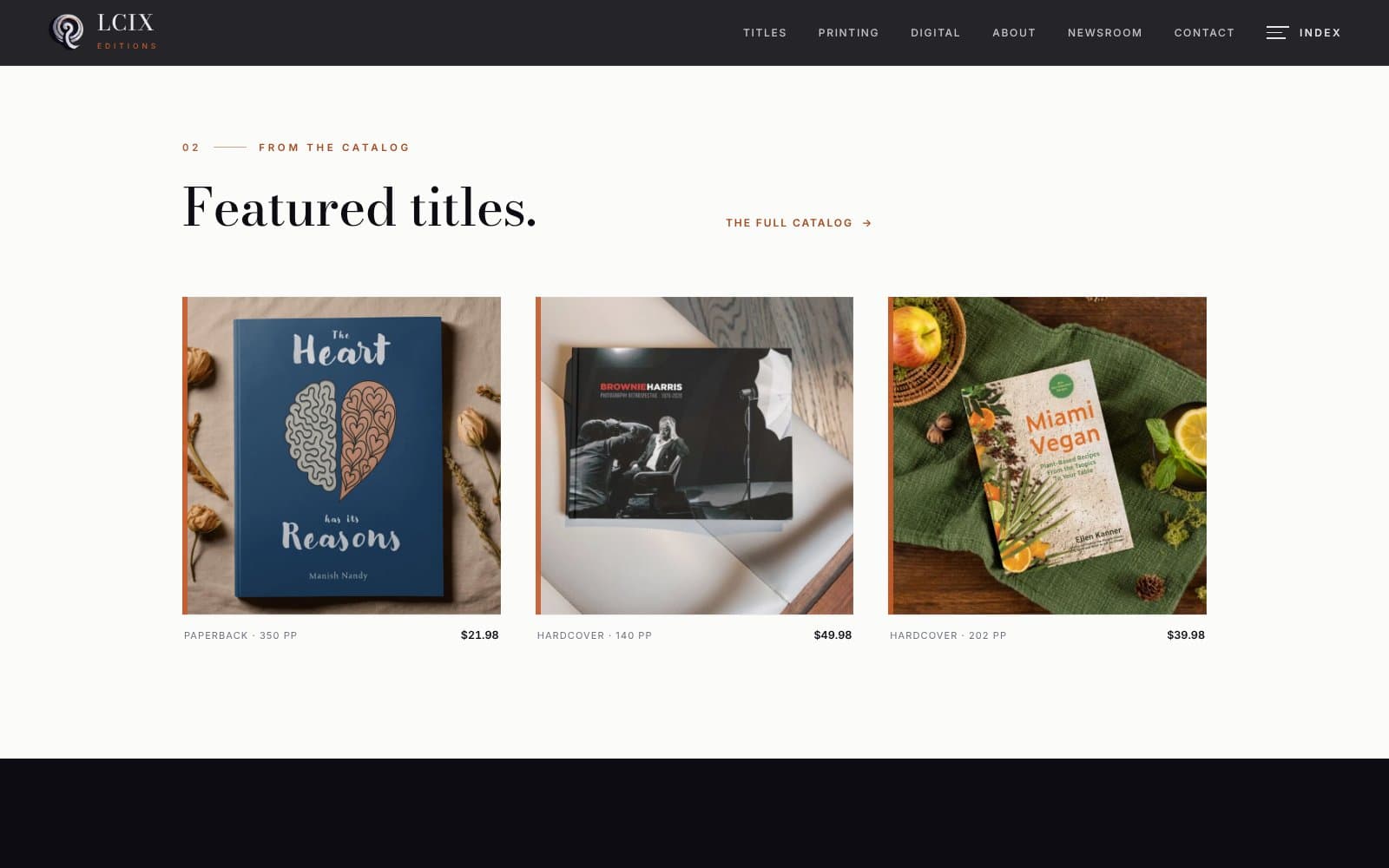

The site, set like the books.
- A governed identity — type, color, pattern, and a seasonal accent program documented as guidelines.
- Catalog rebuilt — twelve titles, six categories, five press items, and eight news items migrated.
- Nothing broken — every legacy link redirected; fonts self-hosted for speed and control.